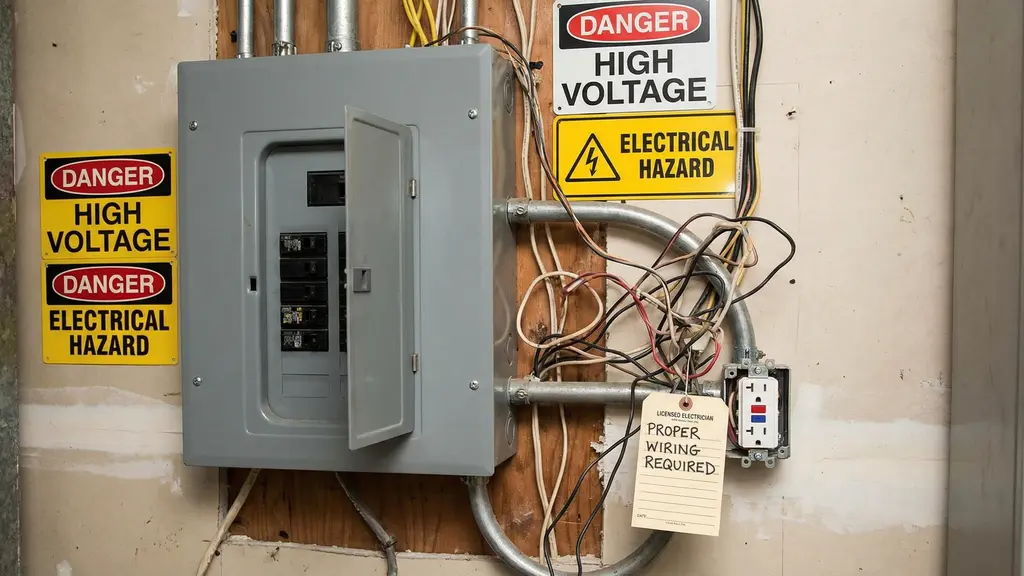
Electrical safety is paramount in every home, protecting your family from shock, fire, and electrocution hazards. Understanding basic electrical safety practices and recognizing warning signs helps prevent dangerous situations.
Outlet Safety Basics
Never overload outlets by plugging multiple high-draw appliances into a single socket—this creates fire hazards. The 15-20 amp circuits most homes use can safely handle about 1,500-2,000 watts of continuous load.
Use power strips with surge protection for electronics, but never chain multiple power strips together—this defeats the surge protection and creates fire risks.
Specialized Outlet Protection
Ensure all outlets in bathrooms, kitchens, and outdoor areas have GFCI (Ground Fault Circuit Interrupter) protection. GFCI cuts power instantly if it detects moisture leakage—essential for wet locations to prevent electrocution.
Tamper-resistant outlets protect children from inserting objects into outlets, an important safety feature in homes with young children.
Electrical Hazards to Watch For
Warning signs requiring immediate professional attention include:
- Flickering lights—may indicate loose wiring
- Outlets that don't hold plugs firmly—fire hazard
- Burning smells near outlets—potential electrical fire
- Circuits that trip frequently—overloaded or faulty wiring
- Outdated electrical panels—lack proper grounding
When to Call a Licensed Electrician
Never attempt electrical repairs yourself unless you're trained and licensed. Most homeowners should call a professional electrician for anything beyond changing lightbulbs or outlets.
Whole-house surge protection protects expensive electronics from power surges and lightning strikes. Annual electrical inspections by licensed electricians identify developing hazards before they become dangerous. Your home's electrical safety is not something to compromise on.
💡 Need Help Implementing This?
Our Electrical experts can help you put this advice into practice. Get a free estimate from Handy Johnny today.